This site is not meant to replace Allopathic Medical or Veterinary Care. If a serious health condition exists for you or your animal, seek a competent licensed medical health care or veterinary professional. The goal of this site is to promote education for those who desire to integrate Allopathic and Naturopathic wellness.
Other Homeopathic Remedies Available:
Ampicillin
Amoxicillin
Prednisolone
Ask about others
Classical Homeopathy is defined as a holistic therapeutic medical science upon the teachings of Hahnemann.The primary precept, the law of similar's, is used to treat ill persons ( animals, also ) using the minute doses of potentized substances.
Other concepts central to homeopathy include Herring's Law, symptom classification, hierarchy of symptoms, potencies, repertory use, case taking, materia medica, and various models which attempt to explain disease, constitutions, typology, etc.
By applying the "like cures like," principle and using minute quantities of specially prepared substances; these substances can be from plant, animal, or mineral kingdoms. Simplex, simile, minimum ( single remedy, law of similar's, minimum dose) are the three principles on which homeopathy is based.( Homeopathic Dictionary and Holistic Health Reference, 4th edition, 1998, Yasgur, Jay )
A homeopathic health practitioner (homeopath) uses pills or liquid mixtures (solutions) containing only a little of an active ingredient (usually a plant or mineral) for treatment of disease. These are known as highly diluted or "potentiated" substances. There is some evidence to show that homeopathic medicines may have helpful effects.
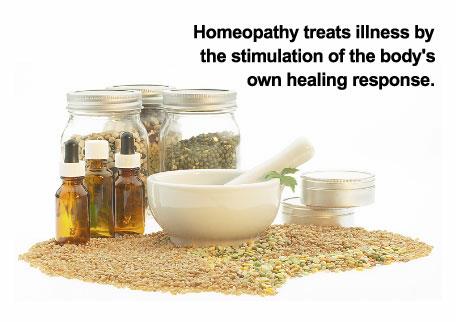
Homeopathic medicine views symptoms of illness as normal responses of the body as it attempts to regain health.
Homeopathy is based on the idea that "like cures like." That is, if a substance causes a symptom in a healthy person, giving the person a very small amount of the same substance may cure the illness. In theory, a homeopathic dose enhances the body's normal healing and self-regulatory processes.





What is Homeopathic Medicine?
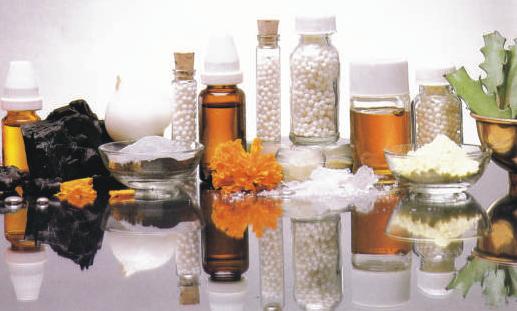
Homeopathic medicines are natural remedies (not drugs). The remedies are a unique, potentised energy medicine, drawn from plants, minerals and other natural sources. Homeopathic medicines are not tested on animals, they are proven on healthy humans. The remedies are safe, gentle, subtle and powerful
What is homeopathy used for?
Historically, people have used homeopathy to maintain health and treat a wide range of long-term illnesses, such as allergies, atopic dermatitis, rheumatoid arthritis, and irritable bowel syndrome. They have also used it to treat minor injuries, such as cuts and scrapes and muscle strains or sprains. Homeopathy is used for removing layers of ill health and assisting the body in achieving homeostasis.
Homeopathy has been widely used in India, England, and other European countries.
Is homeopathy safe?
Homeopathic remedies have been regulated in the United States since 1938 and are considered to be safe.
Office Hours are Monday - Friday 9:00 - 4:00 PM DST